Overhead close-up view showing multiple tiny black rice weevils crawling across a mound of dry white rice.

If you run a Lubbock TX business that handles grain, dry goods, or packaged foods, inventory protection is likely already part of your daily routine. Unfortunately, stored product pests love to find openings no matter how thorough your storage and handling procedures are.

These small insects contaminate products, chew through packaging, and even damage equipment. If you ignore the warning signs, youโ€™ll be facing failed health inspections, disrupted operations, and reputational damage that could be irreparable.

At Bug Out, we know how quickly a minor stored product pest issue can turn into a major infestation, and why catching it early makes all the difference. No two species behave quite the same, so identifying exactly what you’re up against is the first step toward getting rid of it.

Common Stored Product Pestsย 

Facilities handling dry goods regularly encounter stored product pests, each with their own habits and warning signs. Here’s what to keep an eye out for:
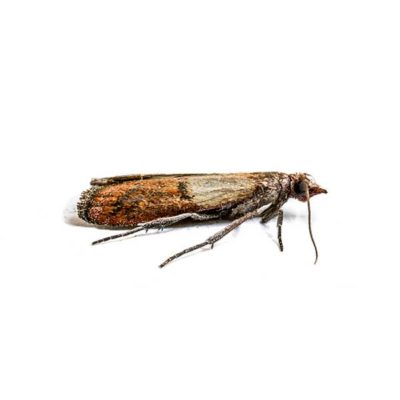
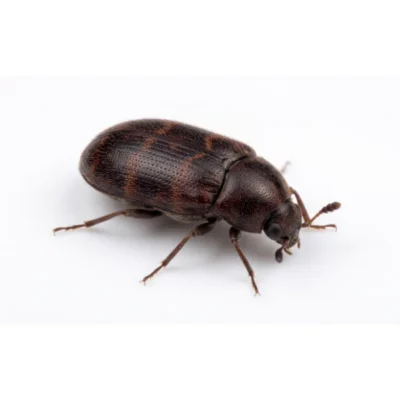
Indian Meal Moth up close against a white background.

Indian Meal Moth

The Indian meal moth is one of the most widespread stored product pests in the food industry, found wherever grains, cereals, nuts, and pet food are kept.ย 

The larvae do the real damage, spinning webbing as they feed. The sticky clumps they leave behind are often the first clue something’s wrong. Adult moths are easy to spot by their two-toned wings, which are bronze or copper on the outer half and pale gray near the body.

Dark brown Warehouse Beetle against a solid white background.

Warehouse Beetle

Warehouse beetles move in fast and settle into hidden corners that donโ€™t get much attention. They can survive on almost nothing, which is exactly what makes them so hard to fully clear out.ย 

Fine hairs cover their bodies and can contaminate goods or set off allergic reactions for some people. Look for oval-shaped, dark brown to black beetles, sometimes with lighter patterning on the wing covers.

Rice Weevil macro closeup against a white commercial kitchen counter.

Rice Weevil

Rice weevils aren’t picky eaters, despite what their name suggests. They’ll infest wheat, corn, and barley just as happily as rice. Most infestations start when an already-contaminated shipment arrives at a facility.ย 

Because they can fly, rice weevils spread quickly once established. Look for small, reddish-brown beetles with a long, narrow snout thatโ€™s noticeably different from other stored product pests.

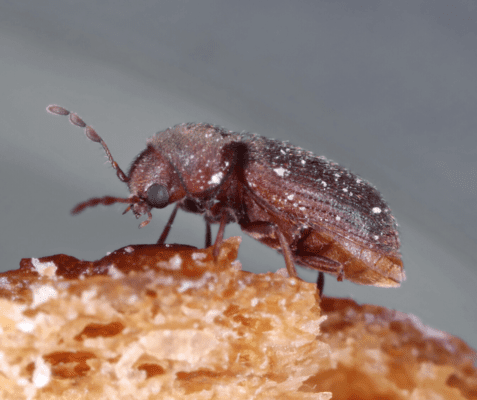
Macro closeup of a Drugstore crawling across a grain based food.

Drugstore Beetle

Not many pests eat as broadly as the drugstore beetle, which will feed on food products, spices, medications, and other non-food items. Their flexible diet is exactly why they can be such a stubborn problem in commercial storage settings.ย 

You might also find them in dried flowers, decorative items, or sealed packaged goods. They’re reddish-brown with a rounded, humped back that helps tell them apart from similar species.

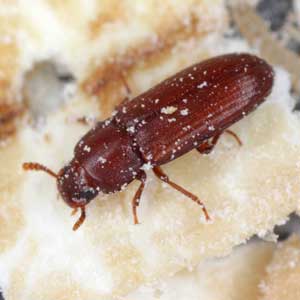
Red Flour Beetle closeup as it crawls against the crumbs of a white food.

Flour Beetle

Flour beetles donโ€™t infest whole grains. Instead, they favor flour, cake mixes, cereals, and other milled products.ย 

Two closely related species, the red flour beetle and confused flour beetle, look nearly identical with small, flat, and reddish-brown bodies. The clearest way to tell them apart is antennae shape and flight ability, since only the red flour beetle can fly.

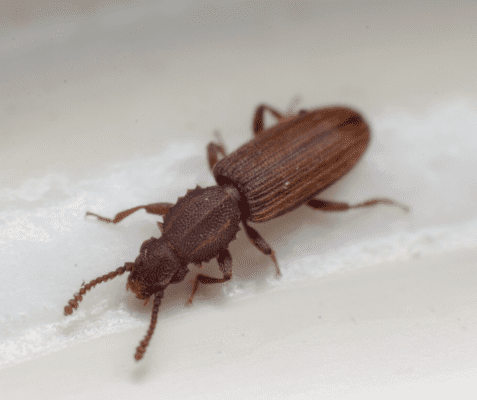
Merchant Grain Beetle up close against a grey background of a commercial buildings floor.

Merchant Grain Beetle

Merchant grain beetles prefer oily foods like nuts, seeds, cereals, dried fruit, and chocolate. Their thin, flattened bodies let them slip through gaps in packaging that seems completely sealed, which is why they’re so difficult to keep out.ย 

To identify these small brown beetles, look for a distinctive saw-toothed edge running along the thorax.

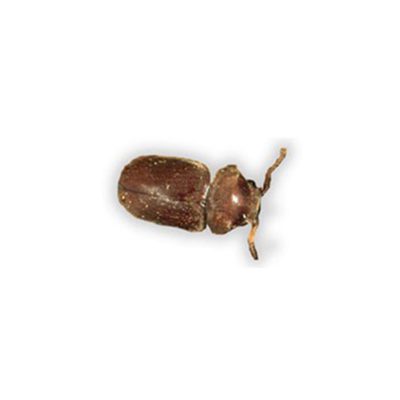
Cigarette Beetle isolated against a solid white background.

Cigarette Beetle

Cigarette beetles are best known for infesting tobacco, but their diet extends to spices, dried herbs, cereals, pet food, and even certain paper products.ย 

At about an eighth of an inch long, they share the same rounded, humped shape as the drugstore beetle. However, unlike the saw-like antennae on the cigarette beetle, drugstore beetles have a club-shaped antennae.

Macro closeup of a Sawtoothed Grain Beetle crawling across a brown/tan grain based food.

Sawtoothed Grain Beetle

Named for the jagged ridges along its thorax, the sawtoothed grain beetle is a close relative of the merchant grain beetle and shares many of the same habits and hiding spots.ย 

You can find them in flour, cereal, pasta, dried fruit, and sugar. Their flat bodies let them squeeze into packaging, making them a recurring headache in storage facilities.

Warning Signs of Product Pest Problems

The longer stored product pests go unnoticed, the more damage theyโ€™ll inflict on your inventory and daily operations. Spotting these warning signs early gives the best chances at stopping a small problem before it spreads:

  • Compromised packaging: Torn, chewed, or damaged packaging usually means pests have already gotten inside.
  • Webbing: As a sign of moth larvae, webbing is an indicator that active feeding is happening within stored goods.
  • Frass: These tiny droppings confirm pests are actively feeding and currently present.
  • Odd smells: Musty or otherwise unusual odors can develop as pest activity contaminates stored products.
  • Larvae or grubs: Discovering larvae or grubs in or near products signals an infestation urgently needs attention.
  • Live adult insects: Spotting insects moving around stored goods or facility spaces means youโ€™re dealing with active infestation.

Need Pest Control Service?

Tips for Keeping Stored Product Pests Under Control

Consistent vigilance is a great strategy against stored product pests, which are known for spreading fast once contaminated goods enter a facility. Routine inspections, ongoing monitoring, and professional guidance work together to prevent small problems from becoming big ones.

Commercial-scale infestations are too large for DIY methods or store-bought products to handle. Pest control professionals are your best bet, using fumigation, conventional sprays, and ultra-low volume treatments to target pests across every life stage. Fumigation stands out in particular for its ability to reach deep into stored goods and eliminate pests hiding in spots that are otherwise out of reach.

Any hint of a pest issue needs quick action. Leaving the problem alone allows more damage to spread, and it becomes tougher to take back control. Working with stored product pest control specialists is the most reliable way to resolve these situations, and Bug Out is proud to handle it for businesses just like yours.

Let Bug Out Protect Your Business

Stored product pests give Lubbock TX businesses a hard time because they’re so skilled at staying out of sight. Their knack for infiltrating packaged goods means problems can quietly build before anyone notices, and without the right tools and expertise, managing them gets even harder.

Bug Out partners closely with our clients to map out a clear, effective plan of action. Our approach follows a structured path of identification, prevention, monitoring, and suppression, all built on Integrated Pest Management (IPM) principles. The goal is to provide you with dependable, consistent results that keep both your operations and your inventory intact.

Reach out to Bug Out today to schedule a free assessment and see the difference our team can make.

Back to Stored Product Pest Control